
From Campbellville Timber to Albion Pottery: How James Campbell Helped Build Brisbane. Part 1 The Timber Town that disappeared
Today, visitors to Coochin Creek can picnic beside the water and launch a canoe with little indication that this quiet location was once one of south-east Queensland's busiest timber settlements. Hidden among the forests near the junction of Coochin and Mellum Creeks, Campbellville grew rapidly in the 1880s before disappearing almost as quickly as it arrived. Its story reflects the rise of Queensland's timber industry, the importance of river transport, and the impact of changing technology on regional communities.
A Town Built on Timber
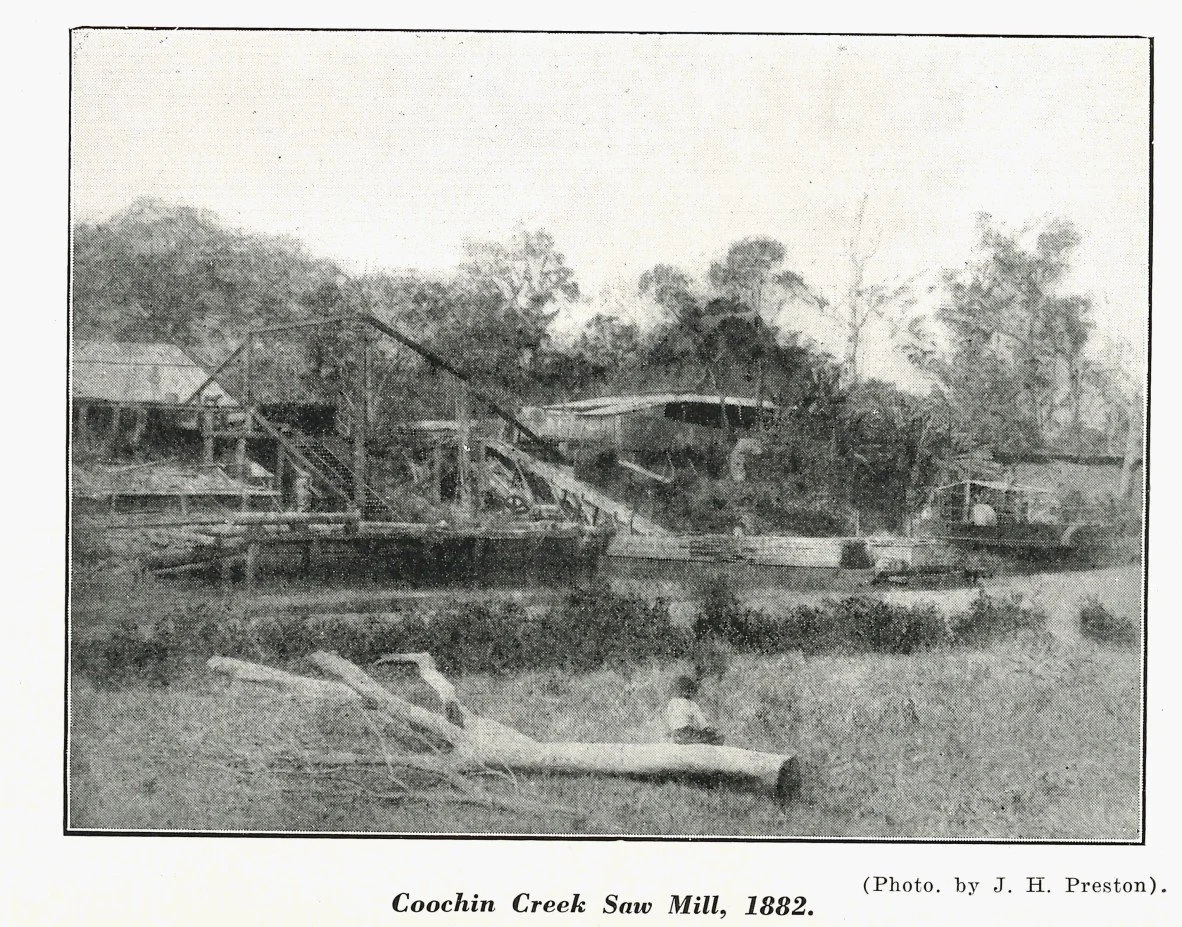
Campbellville was established around the sawmilling operations of Scottish-born entrepreneur James Campbell. In 1881, Campbell opened what became the first major sawmill on Queensland's Near North Coast. The location was carefully chosen. Fresh water from Coochin Creek supplied the steam-powered mill, while the creek itself provided a transport route to Brisbane. Timber from the Blackall Range and surrounding forests was hauled by bullock teams to rafting grounds before being floated downstream to the mill. From there it was sawn, loaded onto vessels and shipped to market.
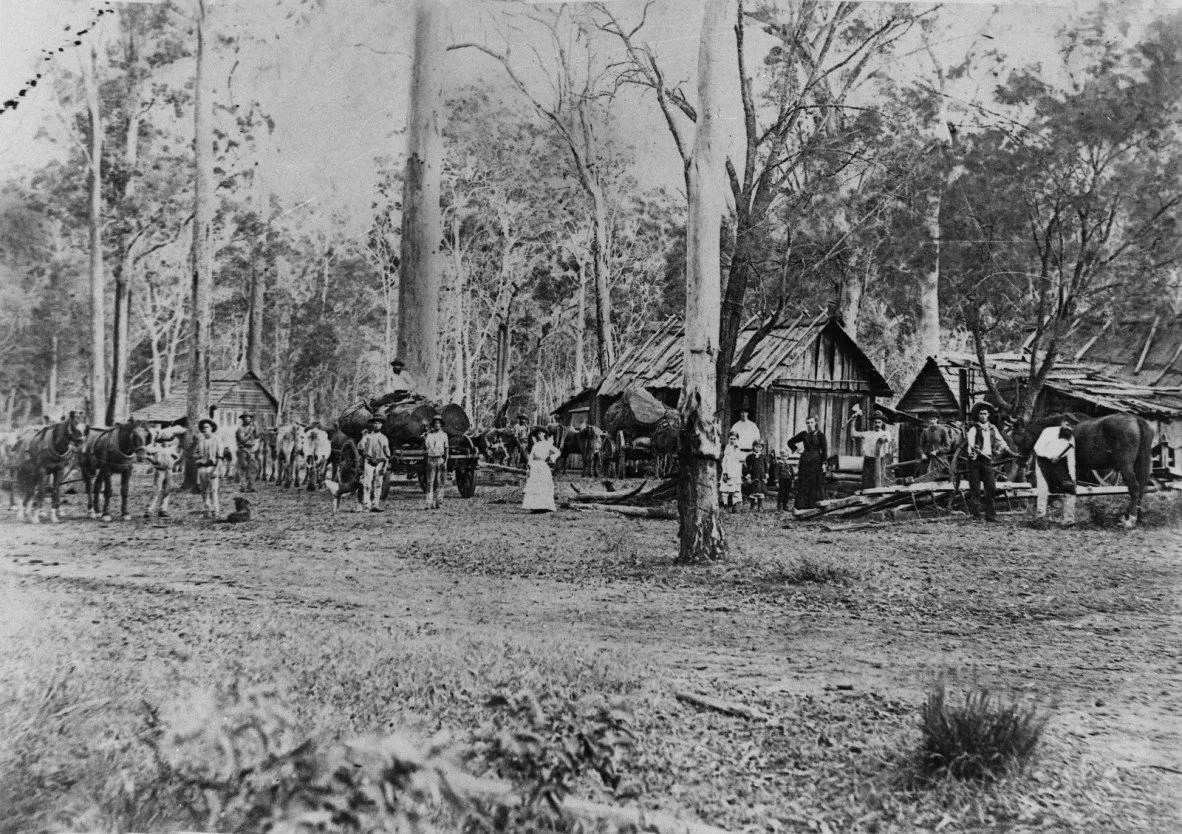
At its peak, Campbellville was home to around 100 workers and their families. The settlement included workers' cottages, a store, post office, wharves, mill buildings and a school. For a brief period, it was one of the most important industrial centres in the district.
The Steamship Mavis
Central to Campbellville's success was the paddle steamer Mavis. Built for James Campbell, the vessel commenced service in 1883 and became the vital link between the isolated timber settlement and Brisbane. The Mavis transported sawn timber, passengers, mail, supplies and general cargo through the challenging waters of Pumicestone Passage.
The vessel's captain, Bill Tutty, earned a reputation for safely navigating the shallow and shifting channels of the passage long before modern navigation aids existed. For seven years the Mavis maintained a regular service, ensuring Campbellville remained connected to the outside world. Without vessels such as the Mavis, the town's timber industry could not have operated on the scale it did.
More Than a Mill Town
Like many isolated settlements, Campbellville quickly developed a strong community life. The local provisional school served around twenty students and became much more than a place of education. The school building hosted dances, meetings and social gatherings, drawing visitors from across the district. Historical accounts describe large community balls and sporting events that brought together residents from surrounding settlements.
For families living in what was then a remote timber district, the school was a vital community hub. It helped transform Campbellville from a workplace into a town.
The Cemetery in the Forest
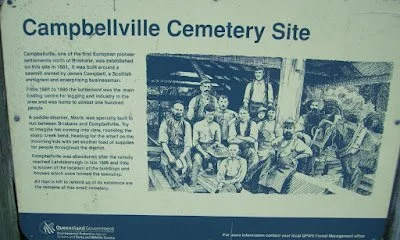
One of the few physical reminders of Campbellville's existence survives today in the form of its small cemetery. Long after the town disappeared, the burial ground remained hidden within the bush. Historical investigations identified only a handful of graves, many belonging to children from the settlement.
Among the stories associated with the cemetery is that of Andrew Lovesey, who reportedly collapsed and died while step dancing during a social event at the school hall. His death was unusual enough to warrant a formal inquest and remains one of the more remarkable stories connected to the town.
The cemetery serves as a reminder that Campbellville was not merely an industrial site. It was a community where people lived, worked, raised families and, in some cases, spent their final days.
Why Campbellville Disappeared
Unlike many towns that declined slowly, Campbellville's fate was largely determined by a new transport technology: the railway.
When the North Coast railway line reached the district in the early 1890s, the economics of the timber industry changed dramatically. Timber was now being harvested west of the railway, while Campbellville's mill remained several kilometres east of it on the creek. Shipping timber by water was no longer the most efficient option. Campbell moved his milling operations closer to Brisbane, establishing a new mill at Albion and transferring machinery from Campbellville.
Without the mill, there was little reason for the town to remain. Families moved elsewhere in search of work, buildings were relocated or destroyed by fire, and the settlement gradually vanished. What had been a thriving community in the 1880s had largely disappeared by the turn of the twentieth century.
Remembering Campbellville
Today, Campbellville survives mainly through scattered archaeological traces, historical records and the stories preserved by local historians. The creek remains, the cemetery still sits quietly in the landscape, and the route once travelled by the steamship Mavis can still be followed through Pumicestone Passage.
Its history reminds us how quickly communities can emerge around industry—and how rapidly they can disappear when technology, transport routes and economic priorities change. For a brief period, Campbellville helped build Queensland, one timber raft and one steamship journey at a time.
References:
https://www.slq.qld.gov.au/blog/campbellville-vanished-sawmilling-town-sunshine-coast
https://heritage.sunshinecoast.qld.gov.au/stories/environment/coochin-creek
https://bribieislandhistory.blogspot.com/2017/02/historic-campbellville.html
https://catalogue.nla.gov.au/catalog/2023439