Brisbane in One Glance: The Panorama That Captured a Young City
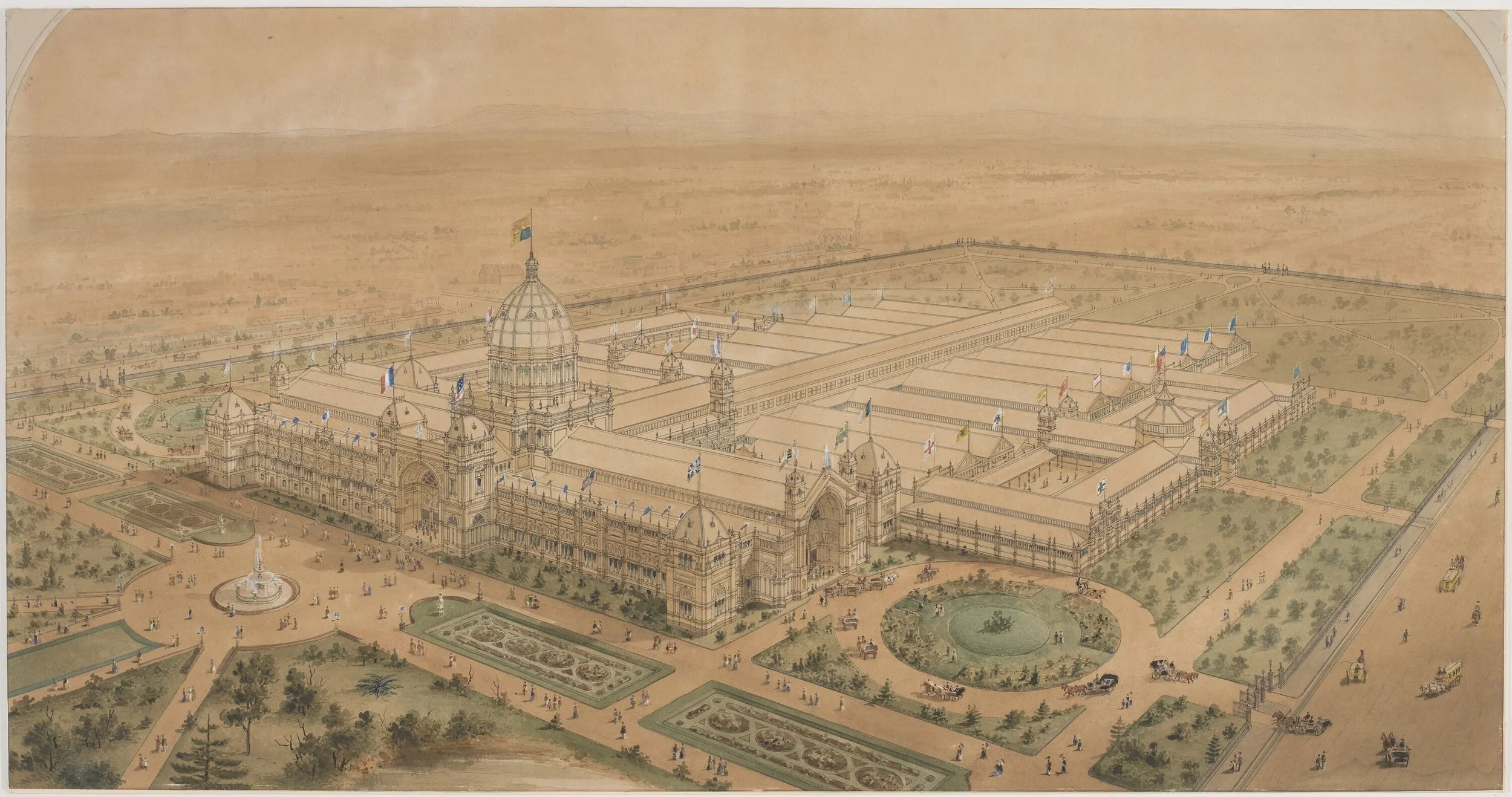
In 1880, artist Joseph Augustus Clarke created what remains one of the most remarkable visual records of Brisbane ever produced. Stretching nearly four metres in length, his panoramic view captured the city from an elevated vantage point, revealing a bustling colonial capital just 21 years after Queensland became a separate colony. Commissioned for display at the Melbourne International Exhibition, the artwork served as a showcase of Brisbane's progress, ambition and growing importance.
The man behind the panorama was Joseph Augustus Clarke, widely regarded as Queensland's first professional artist. Born in England, Clarke arrived in Brisbane in the 1870s and quickly established a reputation for documenting the colony's landscapes, towns and people. His work appeared in newspapers, guidebooks and public exhibitions, helping to shape how Queensland was seen both locally and beyond its borders. When he was commissioned to create the grand Brisbane panorama for the Melbourne International Exhibition of 1880–81, Clarke produced not only a striking work of art, but one of the most detailed visual records of the young city ever created.
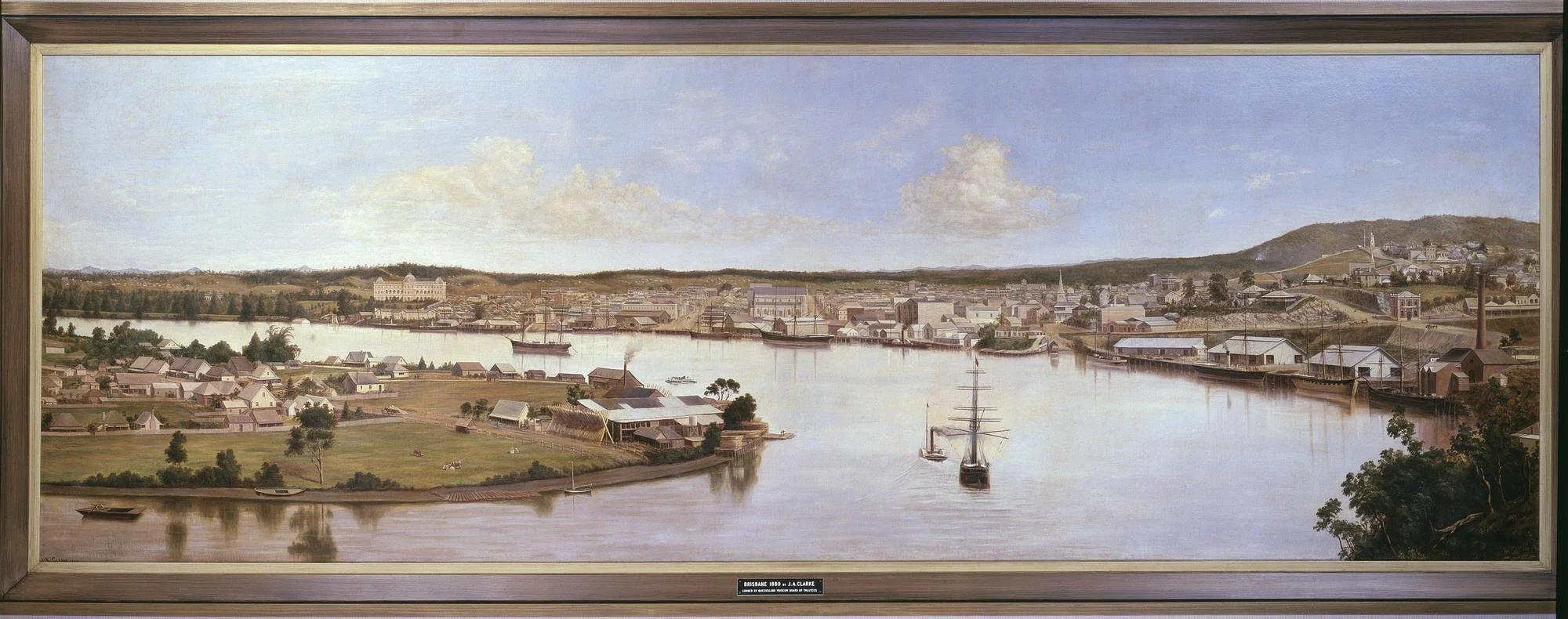
Looking closely at the panorama reveals a city both familiar and unfamiliar. The Brisbane River dominates the scene, crowded with steamships, sailing vessels and busy wharves that formed the backbone of trade and transport. Church spires rise above the rooftops, while public buildings and newly established institutions signal a community investing in its future. Yet there are no skyscrapers, no Story Bridge and none of the landmarks that define Brisbane's modern skyline.
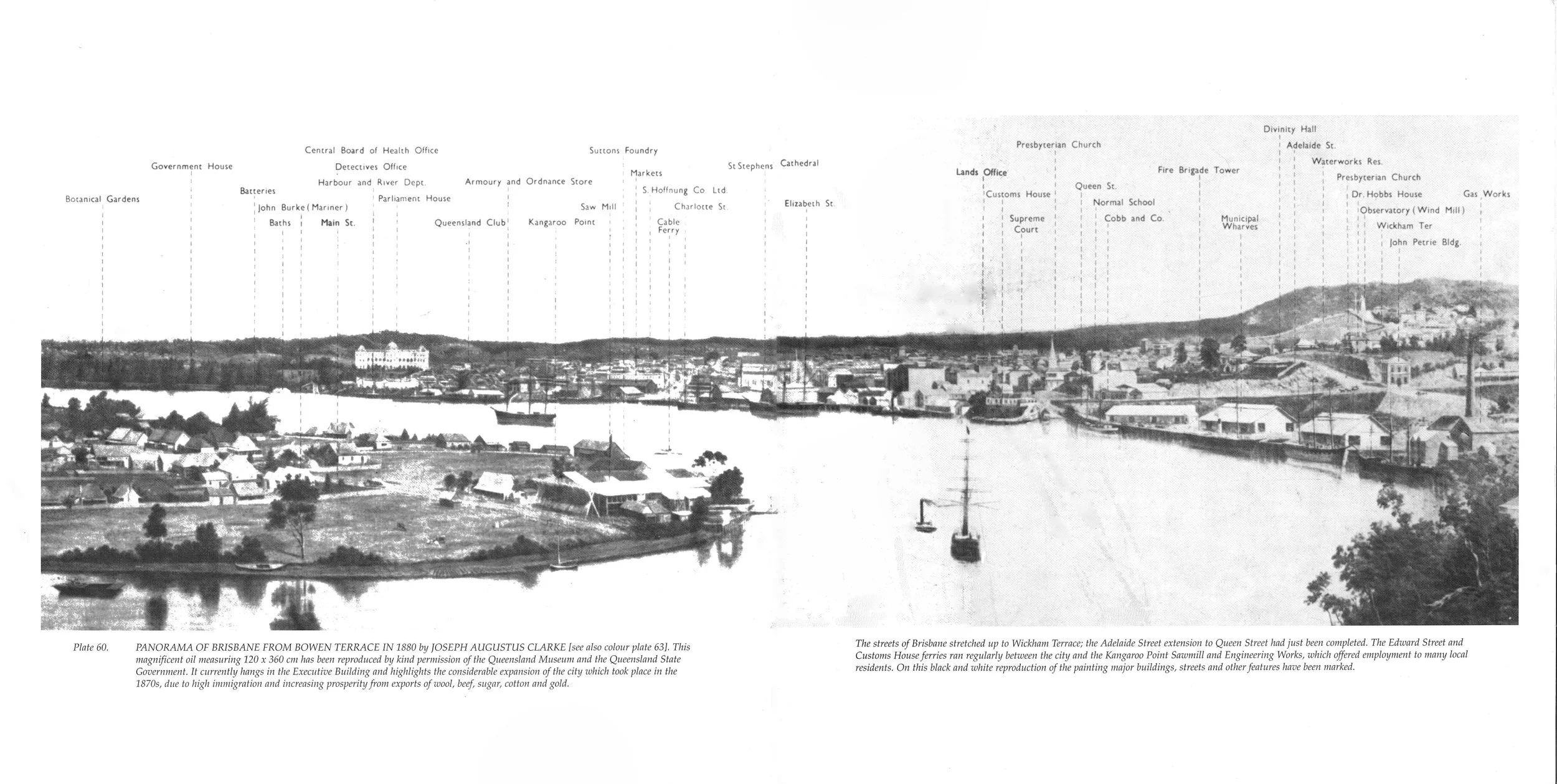
The panorama also captures a city in transition. By 1880, much of Brisbane's convict-era landscape had already begun to disappear beneath new development. The Old Windmill on Spring Hill stands as one of the few recognisable reminders of the settlement's earliest years, while expanding neighbourhoods spread across the surrounding hills. What Clarke recorded was not simply a collection of buildings, but a city actively reshaping itself.
Photographic Panoramas existed at this period, however this painting brought to life a City that no photograph would.
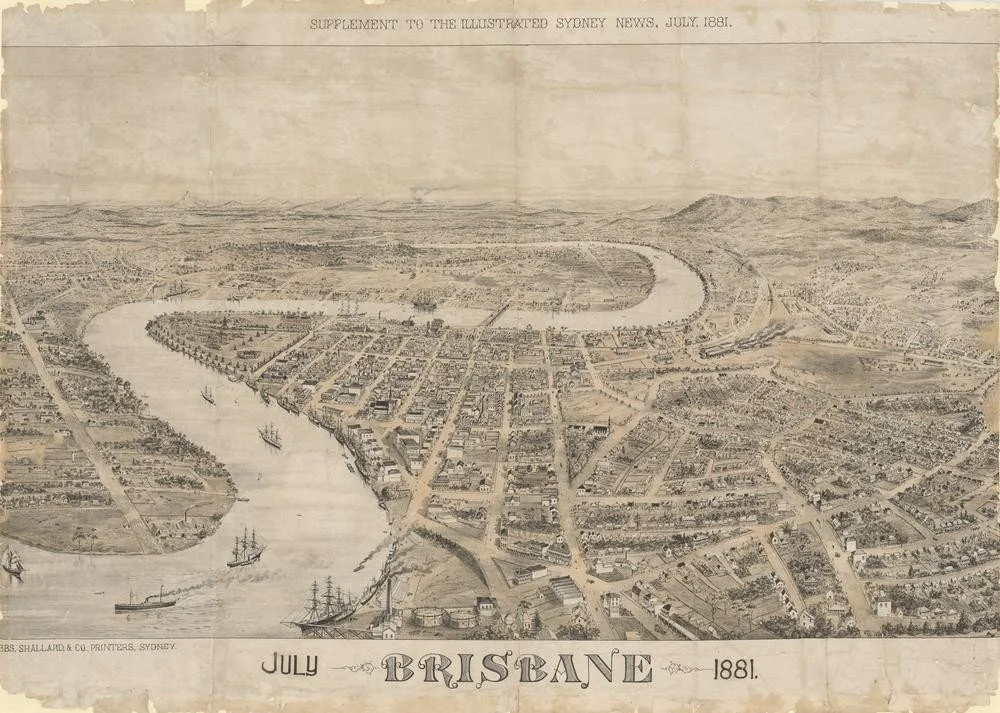
Today, more than 145 years later, the panorama offers a fascinating opportunity to explore Brisbane through nineteenth-century eyes. It is both a work of art and a historical document, inviting us to search for familiar landmarks, trace the course of the river and imagine life in a city that was still discovering what it would become. Few images provide such a rich and detailed window into Brisbane's past.
LINKS for info and photos:
https://www.slq.qld.gov.au/blog/birds-eye-view-brisbane-1881
https://www.qagoma.qld.gov.au/stories/j-a-clarkes-grand-picture-of-brisbane-australia/
https://digitalcollections.qut.edu.au/8798/1/1880%20Brisbane%20panorma%20sketch.jpg
https://moretonbayandmore.com/2025/08/31/panoramas-of-old-brisbane/