
Open for Business: Four Women Who Shaped Early Brisbane's Commerce
Brisbane's commercial story is usually told through its merchants, aldermen and property barons. But look closely at the shopfronts, arcades and bakehouses of the colonial town and women appear again and again: running butcheries, baking bread for thousands, leasing out shops and opening fashionable millinery rooms. Many worked in the shadow of a husband's name, and the records that might tell their stories are patchy. Here are four whose lives can still be traced.
Mary Mayne – The Queen Street Butcher
Mary McIntosh was born around 1826 near Ennis in County Clare, Ireland, and migrated to Sydney as a single woman in 1842. In April 1849 she married Patrick Mayne in Brisbane. Patrick's butchery stood on Queen Street, on the ground where the Brisbane Arcade stands today, and grew into a business that took in hotels, shops, houses and land.
When Patrick died in August 1865, Mary was already experienced in business, which was unusual for a married woman of the time. She took over the butcher shop, paid rent on it to the estate and traded in her own name. Although trustees had been appointed, she largely controlled the management of the estate. Historian Bernadette Turner argues that she preserved most of the family's property despite Patrick's debts while building a fortune of her own. She bought land at a Crown land auction at Kedron in 1865, and by 1870 had new shops rising on her Queen Street land. By early 1872 she was auctioning off the contents of the butchery, and she later made her home at Moorlands, in Auchenflower.
Mary died in 1889. Her legacy reaches well beyond her own lifetime: her children James and Mary Emelia Mayne became two of the University of Queensland's most significant benefactors, and Turner argues that Mary's fortune, as much as Patrick's, funded their giving.
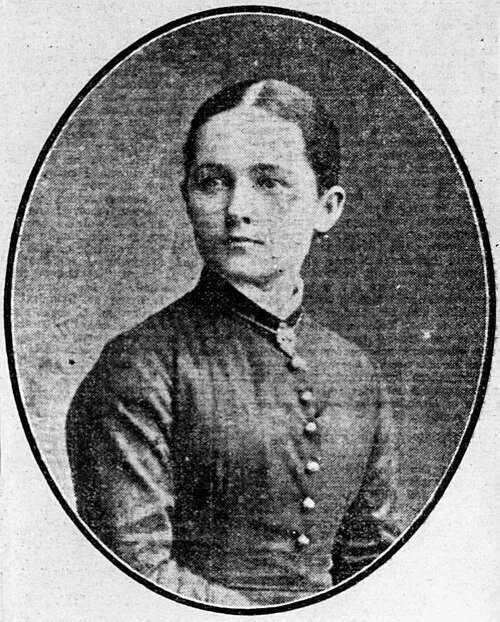
Mary Emelia Mayne, daughter. No images avail of Mother
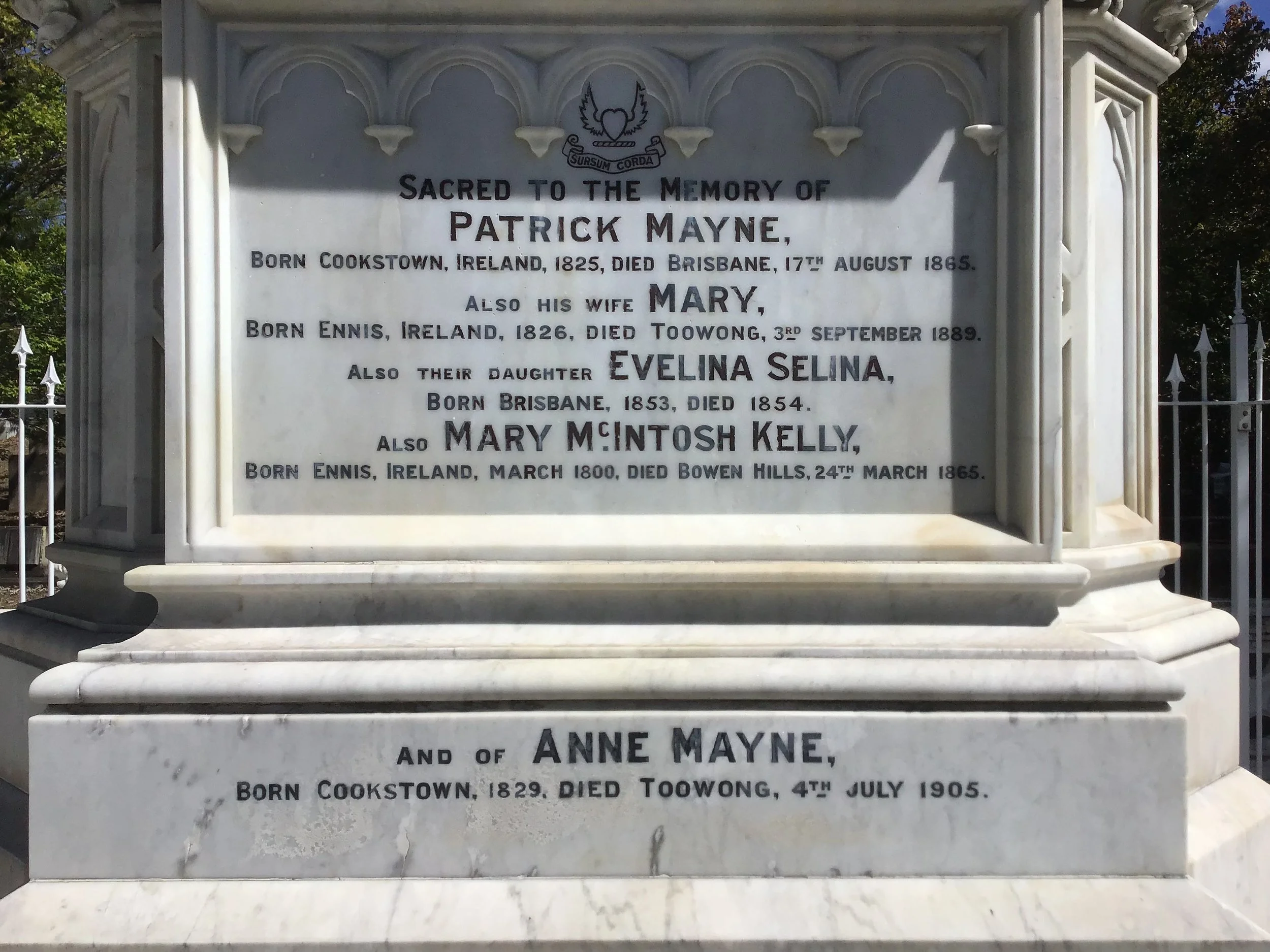
Kate Bragg – The Valley Pastrycook
Catherine "Kate" Fitzgibbon came to Queensland as a child in 1853. In 1864 she married Joseph Bragg, whose father Charles, a Dorset-born baker, had a bakery in Brisbane by 1859. By 1865 Joseph was baking from a shop on Ann Street, Fortitude Valley, but his finances were precarious (he was declared insolvent in 1866) and the marriage was troubled.
Joseph died in August 1883, and Kate announced she would carry on the business. In 1885 she commissioned a new two-storey brick bakery and shop from architect George Campbell Wilson, designed to sit comfortably beside the neighbouring Apothecaries Hall. By 1888 she was producing 700 loaves a day with five employees, and also ran a catering trade and sold fancy goods. One contemporary described her as an energetic lady with more than average business aptitude.
It was not an easy path. The 1890s depression forced her to cut staff, and in 1898 her creditors moved to liquidate her estate. Kate kept the bakery going anyway, as a Master Baker who agreed to the journeymen's eight-hour day, built a new brick bakehouse in 1906 after an official inspection had found the old one cramped and dirty, won a government tender to supply bread in 1904, and regularly donated baked goods to charity fundraisers. In 1910 her sons John and William took over, moving to a café on Brunswick Street. Kate died in 1916. Her bakery building at 694 Ann Street still stands and has been a local heritage place since 2000.
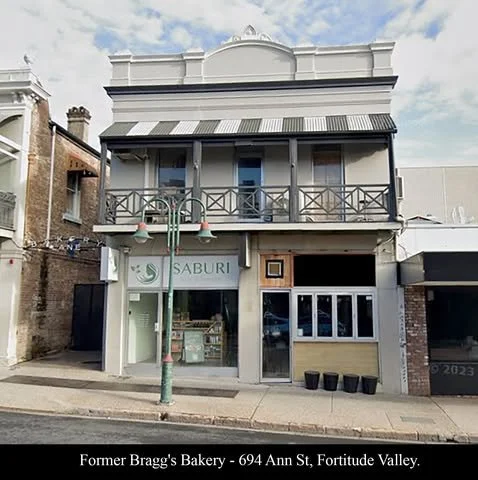
Bakery Lane, (FB New Farm History)
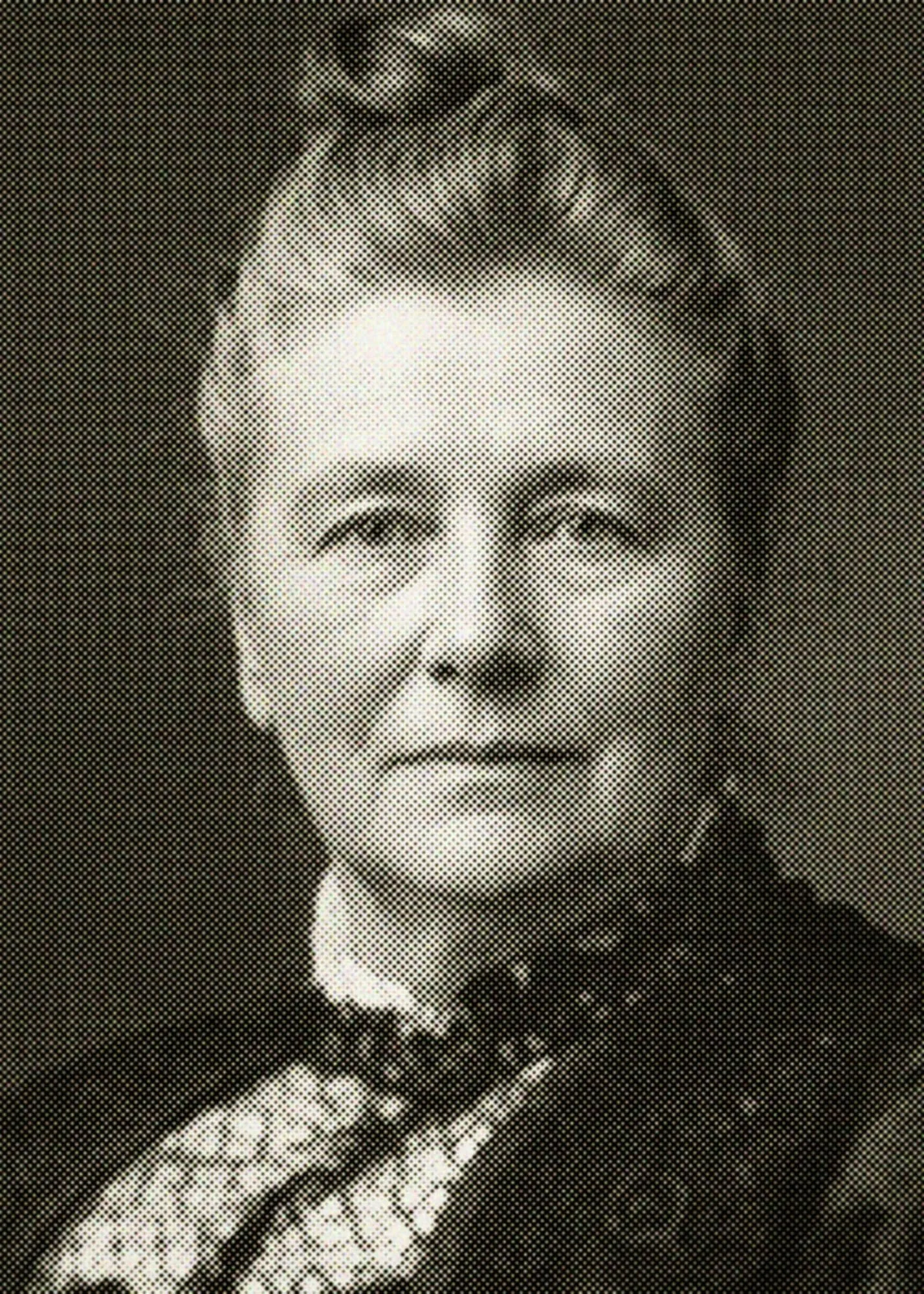
supplied by Bragg family on Facebook
Sophia Morwitch – The Partner Behind the Arcade
Newspapers credited Henry Morwitch as the owner of Morwitch's Minories and the Grand Arcade, which opened at the corner of Queen and Edward Streets in 1885 with more than 60 lettable spaces. His wife Sophia, born Sophia Lazarus in London around 1840, barely features, yet Dr Nicole Davis's research shows how much of her story hides in the margins.
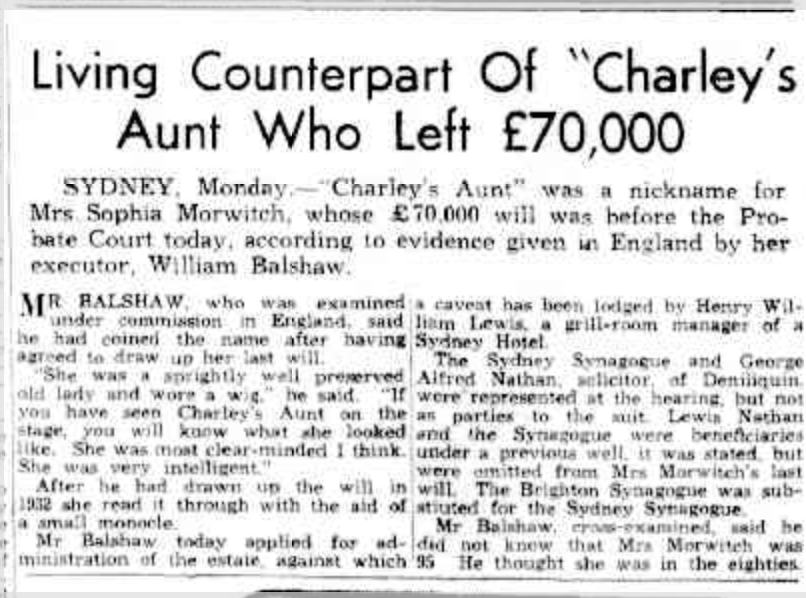
Sophia and Henry married in Dunedin in 1864 and arrived in Brisbane after Henry's New Zealand bankruptcy. In the insolvency papers, Henry admits that Sophia kept the expenditure books, recorded the takings and sometimes paid the wages. In Brisbane she turns up behind the counter of his Albert Street pawnbroker's shop, and in later advertisements job-seekers were directed to her at the arcade office or boot shop. After three decades in Brisbane the couple moved to Sydney in 1896 and then to London. Sophia died in Brighton in 1933, leaving an estate of about £90,000. Davis suggests that Sophia's contribution to the couple's rise may have been considerable.
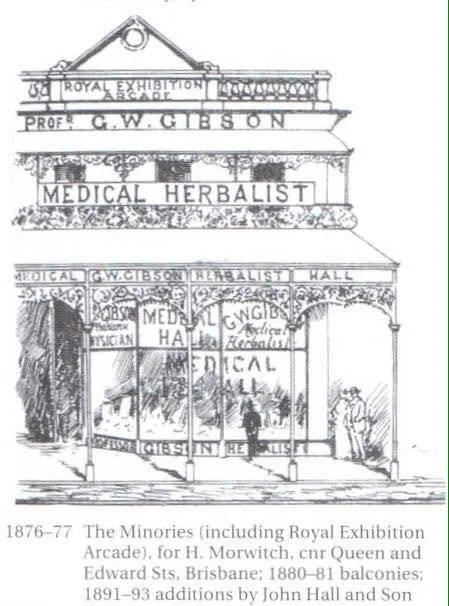
"Qld Architects of the 19th century", Donald Watson & Judith McKay
Gertrude Rome – The Young Milliner
Where Sophia was hidden, Gertrude Rome was front and centre. Born in 1867 near Liverpool, she arrived in Brisbane in 1885 with her mother and brothers, perhaps after her father's bankruptcy. Within months, while still in her late teens, she was among the first tenants of the (Sophia Morwitch’s) Grand Arcade, trading as Miss Rome's London Millinery Establishment. Advertisements in Queensland Figaro & Punch present her plainly as the owner, with no male relative attached.
In early 1887 she moved to larger premises on Edward Street, and then her trail goes quiet. By the mid-1890s she was back in Britain, where she married and later published novels under the pen name Perrington Primm. One, The Girl at Riverfield Manor (1900), opens at Indooroopilly, and Davis suggests she drew on her own years in Brisbane.
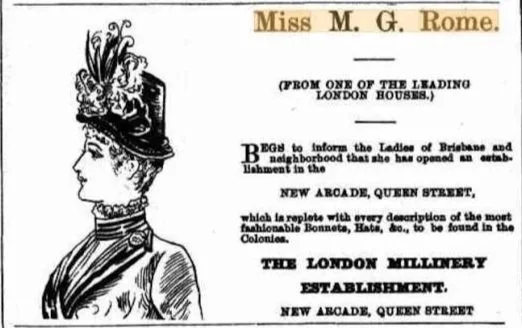
Qld State Archives
What Their Stories Tell Us
These women came from different backgrounds and had very different outcomes: a wealthy widow, a baker who battled insolvency, an unacknowledged partner and a young entrepreneur who left. But the thread running through them is that women often entered business because of a husband's death, debts or absence, and then made something of it. Their stories are hard to find. The 1925 amalgamation of Brisbane's councils destroyed many municipal records, and women's names were often recorded as initials or hidden behind male relatives.
For more on these women, their lives and businesses, see Nicole J Davis, ‘An Occupation for a Lady: Businesswomen in Brisbane’s Arcades, 1880s–1920s’, Asia-Pacific Economic History Review (2026). DOI: https://doi.org/10.1111/aehr.70018.
[1] Jennifer Aston & Catherine Bishop, ‘Discovering a Global Perspective’, in Bishop, C. & Aston, J. (eds.), Female Entrepreneurs in the Long Nineteenth Century: A Global Perspective (Palgrave MacMillan, 2020); Leanore Davidoff & Catherine Hall, Family Fortunes: Men and Women of the English Middle Class 1780–1850, 3rd edition (Routledge, 2018).
QSA Talks: Occupations for Ladies - entrepreneurial women in Brisbane’s nineteenth-century arcades https://www.youtube.com/watch?v=ljlbrVzXfTY