Every day, thousands of travellers land at Brisbane Airport without realising they are touching down on a lost suburb. Under the runways lies Cribb Island. This bayside community was once the city's closest beach, and it became the first Brisbane suburb ever completely erased for a new development.
An island that wasn't
Cribb Island was never really an island. It was a strip of coast north of the Brisbane River mouth, cut off from the mainland only when high tides flooded the creeks and mudflats around it. Long before Europeans arrived, Traditional Owners used these mudflats, estuaries and woodlands for hunting, trade and camping.
In 1863 John George Cribb, son of Brisbane alderman and politician Robert Cribb, bought 150 acres here for £160, planning to farm it. As was the custom, he named it after himself.
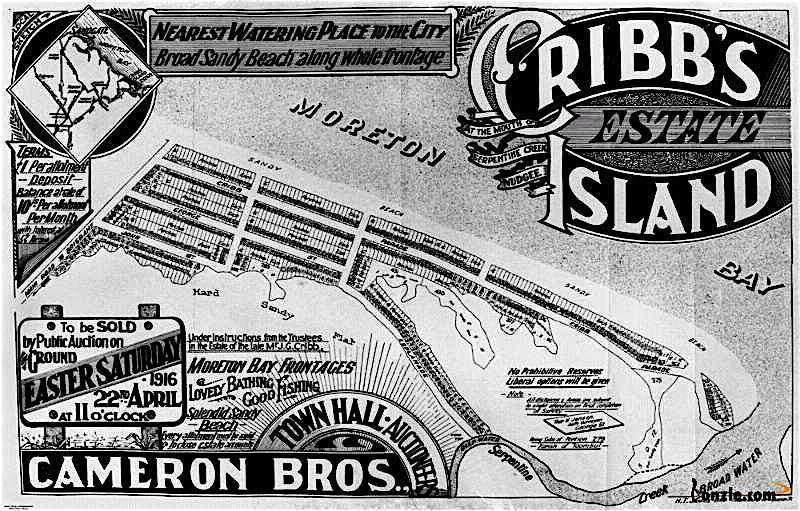
cribb-island-sales-cameron-brothers.jpg
Brisbane's seaside escape
In 1885 Cribb sold 65 acres to James and Ella Jackson, who ran the Bramble Farm fruit plantation and cannery. Campers began returning to their land year after year, so the Jacksons leased sites for holiday homes. The northern end became known as Jackson's Estate.
After Cribb's death, his remaining land was auctioned in 1916 as the "nearest watering place to the city." Weekenders and shacks sprang up beside Queenslanders, many built from timber, fibro and recycled materials, even old car crates. Visitors came for open-air dances, social club nights and newspaper-sponsored sand garden competitions.
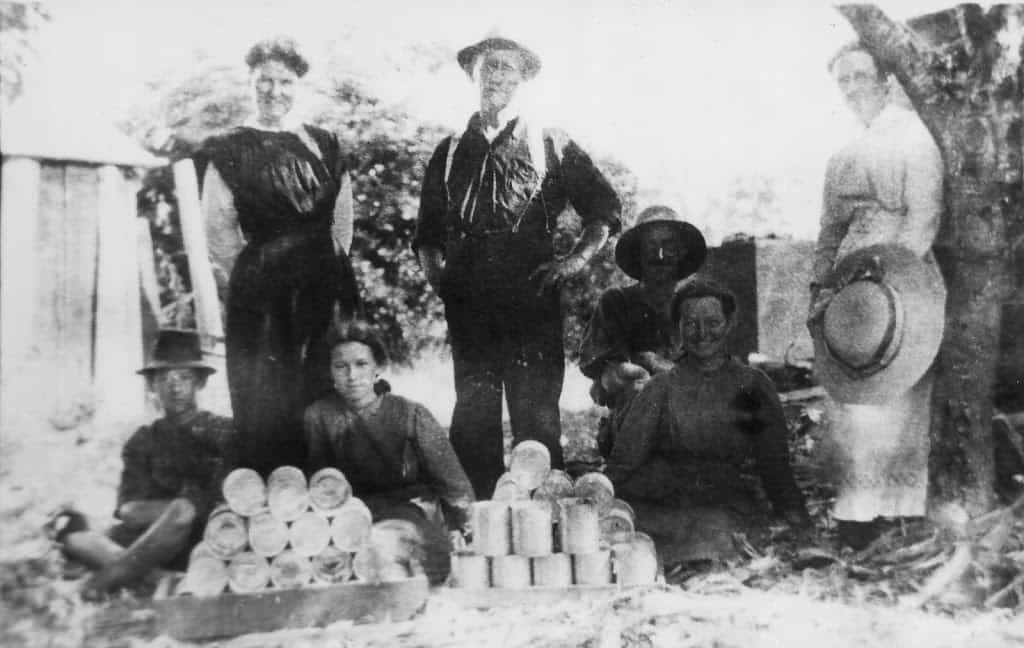
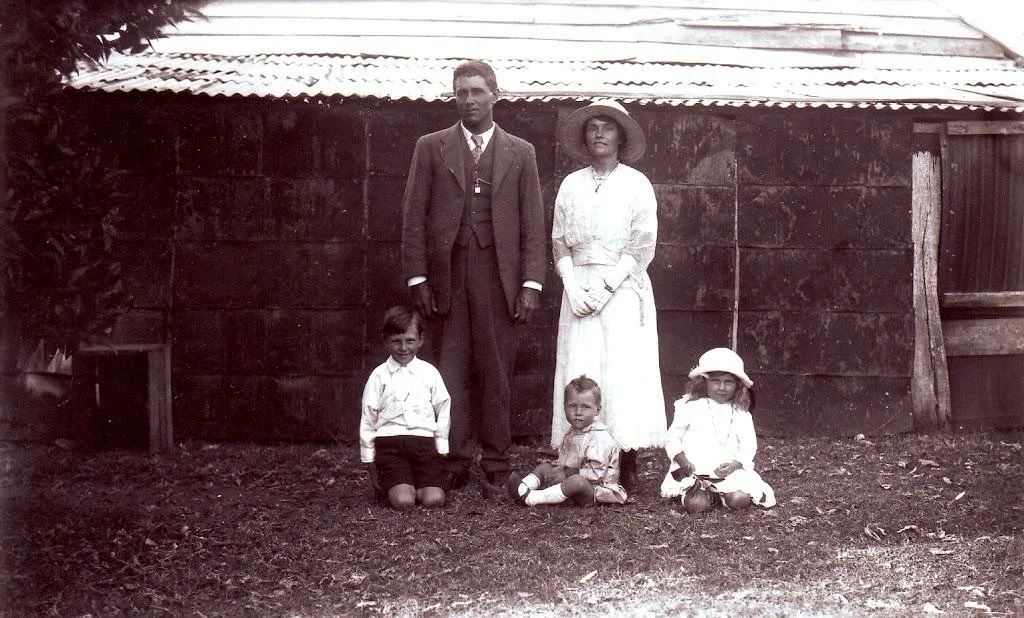
Jackson family in front of the old Cannery
A community built by hand
During the Great Depression, families looking for affordable housing moved to "Cribbie" for good. Residents built much of the suburb themselves. At its height it had a school (opened 1919), post office, police station, medical clinic, cinema, kiosk, playground, two churches and a private bus to the city.
Life was not always easy. Erosion ate at the shoreline and waterfront homes slipped into the bay. Council ordered makeshift shacks repaired or pulled down, and the press labelled it a "poor man's seaside resort" and later a "shanty town." Residents' petitions for a seawall went unanswered.
In the early 1960s, three young brothers named Barry, Robin and Maurice Gibb spent part of their childhood here, years before they became the Bee Gees.
Resumed, removed, erased
After World War II, planes coming in to Eagle Farm flew low over Cribb Island. In 1971 the decision was made to expand the airport northward, and from the early 1970s the Federal Government began resuming land. The school closed in 1979 and the last resident left her home in 1980. By 1981 Cribb Island had vanished from street directories. In 1986 the Queensland Government formally struck the name from official maps because no trace of the suburb remained. The new airport opened in 1988.

StateLibQld_1_118720_Fishing_shacks_on_the_foreshore_at_Cribb_Island,_1926.jpg
Still staying alive
Today only fragments of the old foreshore and debris under the sand survive. But Cribbie lives on. Former residents still hold reunions, and Joyce Hyam's watercolours of the suburb are held by the Museum of Brisbane. The airport's ibis hotel has even named its bistro the Cribb Island Beach Club, serving Cribbie's famous "spiders."
Next time you fly out of Brisbane, look down. You're taking off from someone's lost backyard.
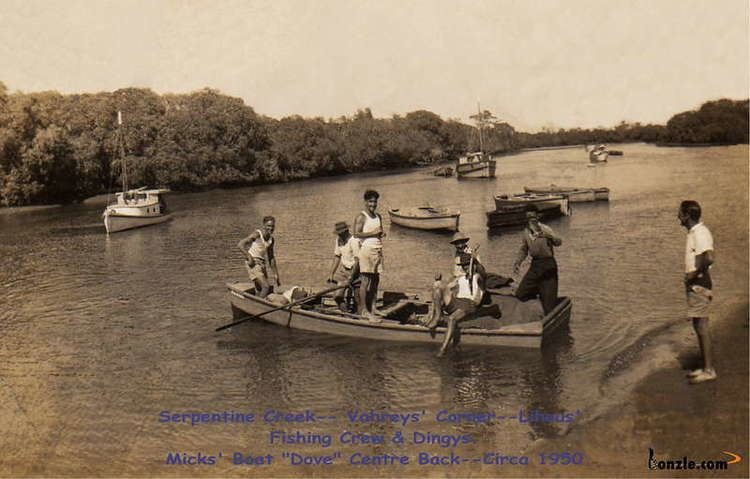
cribb-island-queensland-750.jpg