
Most prisons are built to stop people escaping. Brisbane's early women's prison had the opposite problem: its walls couldn't stop men getting in.
Twice condemned
The women sent to the Moreton Bay penal settlement were often described as "double offenders" – convicts who had reoffended after being transported to New South Wales. From around 1829, women were held in the Female Factory on Queen Street, where the GPO stands today.
The building had a serious flaw. It stood in the middle of a town populated largely by male convicts, soldiers and officials, and it was vulnerable to intruders. Commandant Foster Fyans was particularly frustrated by the night-time visitors. The final straw came in 1836, when the Chief Constable himself was caught climbing over the walls.
Six miles from temptation
The answer was distance. In 1829, Commandant Patrick Logan had established an agricultural farm at Eagle Farm, approximately six miles (10 kilometres) from Brisbane Town. Male convicts cleared the land and grew crops including maize and potatoes.
Women were sent to work at Eagle Farm from the early 1830s, and in 1837 the remaining female prisoners in Brisbane Town were transferred there. An existing agricultural establishment was adapted to become a place of confinement, designed to keep the outside world at a distance.
A double fence surrounded the compound, with an outer stockade of sharpened poles approximately five metres high. Inside were huts for the women, a matron's quarters, a hospital, a school, a cookhouse with a needle room, and a block of six cells.
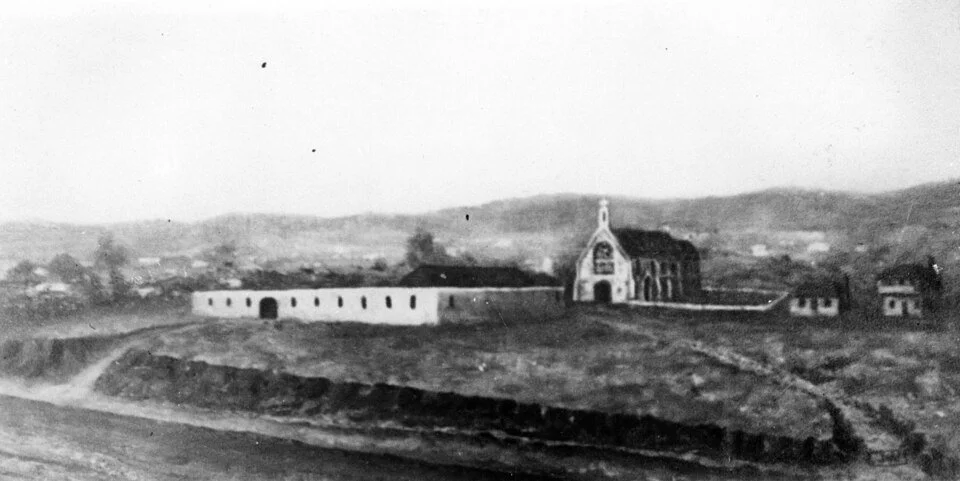
Women's_Prison,_Female_Convict_Factory_on_the_site_of_the_present_G.P.O.,_circa_1835.jpg John Oxley Library SLQ
Work and punishment
The women's days were long. They worked in the fields, did needlework, mended clothes, unpicked old rope and even helped build roads. Each week, the male convicts' washing arrived by bullock wagon for them to launder.
Discipline was harsh. Women who broke the rules faced solitary confinement in tiny cells, irons or having their heads shaved. Their lives were shaped by hard labour, strict supervision and isolation, in an environment where their opportunities for freedom were extremely limited.
And despite the stockade, the problem followed them. Encounters still took place in the long grass around the farm, and one supervisor, Patrick McDonald, was replaced after allowing constables access to the women.
The end of the line
The Moreton Bay penal settlement was progressively wound down, with its final evacuation taking place in 1839. On 9 May that year, the Sophia Jane departed for Sydney carrying 57 women from Eagle Farm. Although most of the women left, five were kept on as assigned servants in the district.
The site subsequently became a government cattle station around 1841, before being surveyed and sold as farmland.
Its next life was in the air. The Commonwealth selected Eagle Farm for an aerodrome in 1922, and it officially opened in 1925. It became an important centre for early Australian aviation, associated with pioneers such as Charles Kingsford Smith and Bert Hinkler.
During World War II, the aerodrome became a major US military airfield and aircraft assembly centre. Subsequent airport development and extensive filling transformed the landscape, burying much of the earlier convict-era site.
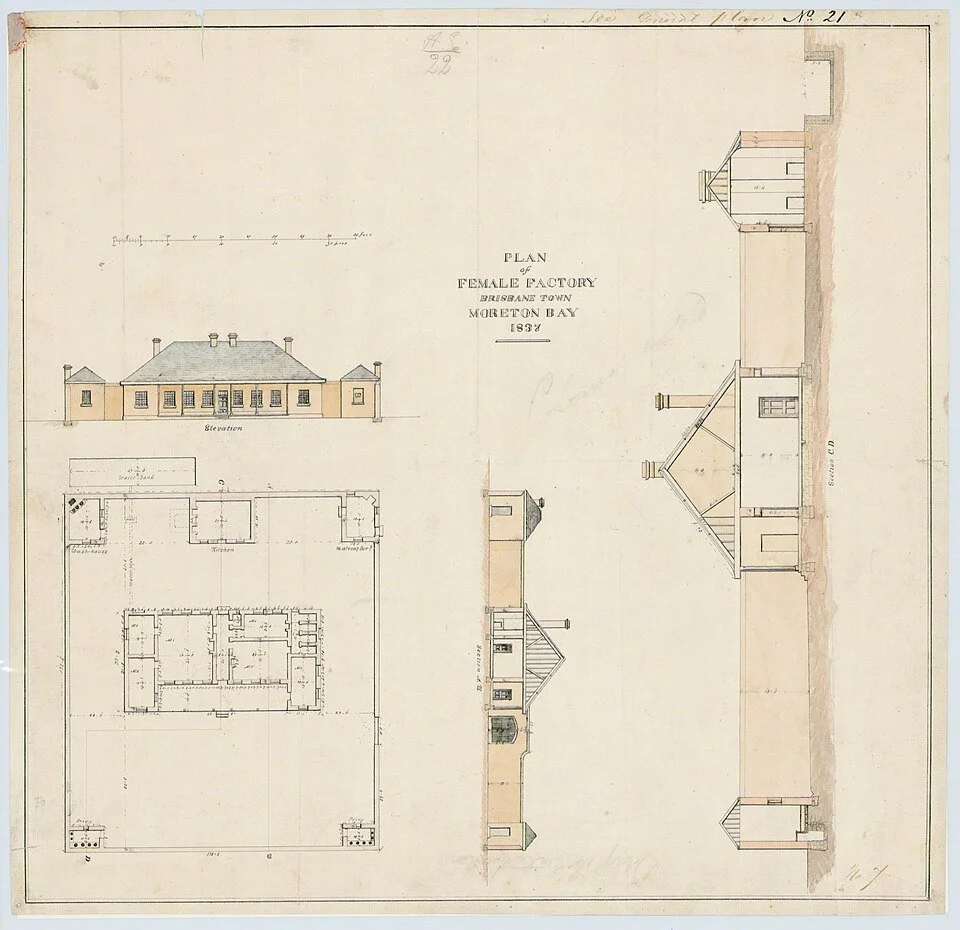
Plan_of_Female_Factory,_Brisbane_Town,_Moreton_Bay_1837. Queensland State Archives
Hidden in plain sight
The Eagle Farm Women's Prison and Factory Site was added to the Queensland Heritage Register on 7 February 2005. It is one of Brisbane's rare surviving convict-period archaeological sites and an important reminder of the city's early penal history.
The wider Moreton Bay penal settlement is recognised as one of Australia's seven secondary punishment sites. Eagle Farm is particularly significant because of its association with the imprisonment and forced labour of convict women.
Today, the Eagle Farm Women's Prison and Factory Site forms part of TradeCoast Central Heritage Park on Schneider Road, Eagle Farm. The park includes an interpretive centre, walking trails and outdoor displays exploring the convict site and its later aviation history.
The women left few records in their own words, but the archaeological site preserves an important part of Brisbane's early history. Their stories of hard labour, punishment and isolation deserve to be remembered, and the ground beneath still holds traces of their lives.
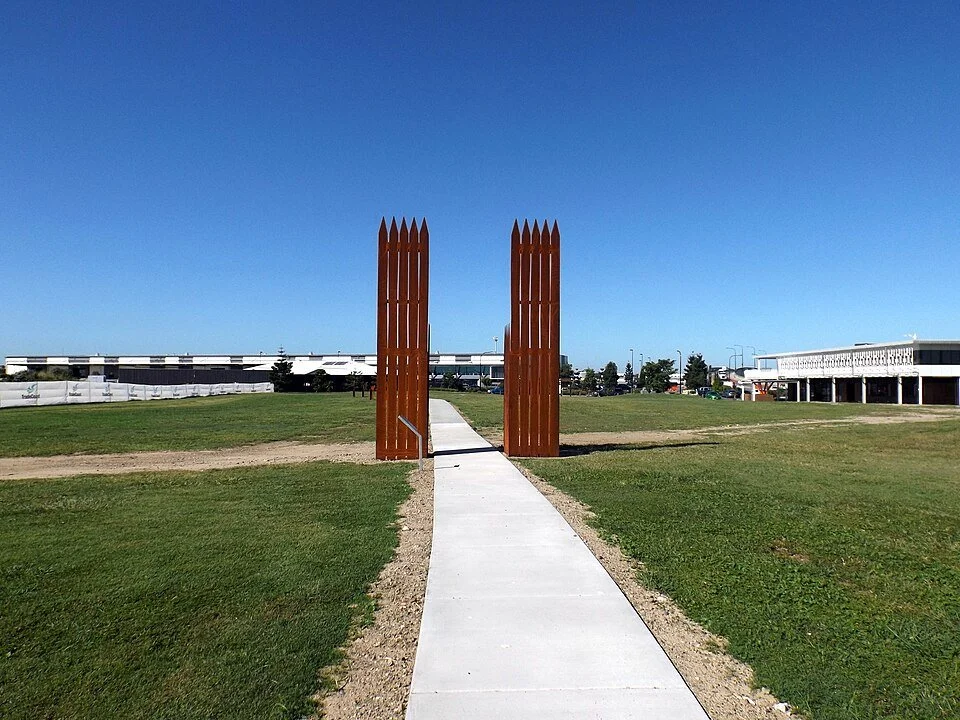
Eagle_Farm_Women's_Prison_and_Factory_Site.jpg
Sources:
• Wikipedia: Eagle Farm Women's Prison and Factory Site
• Queensland Heritage Register entry 600186
• State Library of Queensland: Convicts, Queen Street and early Brisbane gaols
• Paul Budde History: Eagle Farm
• Harry Gentle Resource Centre: female convicts after 1839
• Wikipedia: Second World War Hangar No. 7