
Brisbane’s Cemeteries: Forgotten Burial Grounds and Living Heritage
Before Brisbane expanded into a modern city, its earliest burial grounds were placed on the outskirts of settlement. Over time, growth pushed the city across these sites, and some cemeteries disappeared entirely beneath streets, parks and buildings. Others remain active today as places of remembrance and heritage.
Together, these cemeteries tell a story of Brisbane’s changing attitudes to death, public health, religion and urban development.
Forgotten burial grounds of the city
First Brisbane Burial Ground
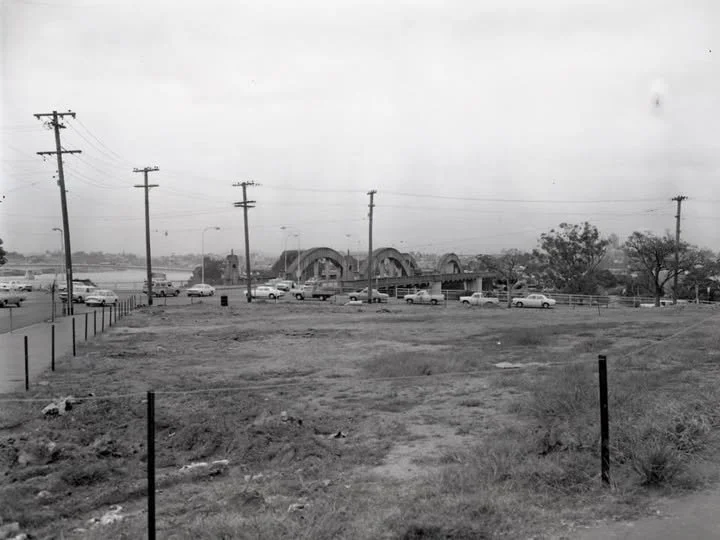
Brisbane’s first European burial ground was established in 1825 near the Brisbane River during the convict settlement period. It served soldiers, convicts and early settlers until 1843, when burials were relocated to a new cemetery further from the growing town.
Today, the site lies beneath the inner city with no visible surface markers, but it remains archaeologically significant as Brisbane’s earliest known burial place.
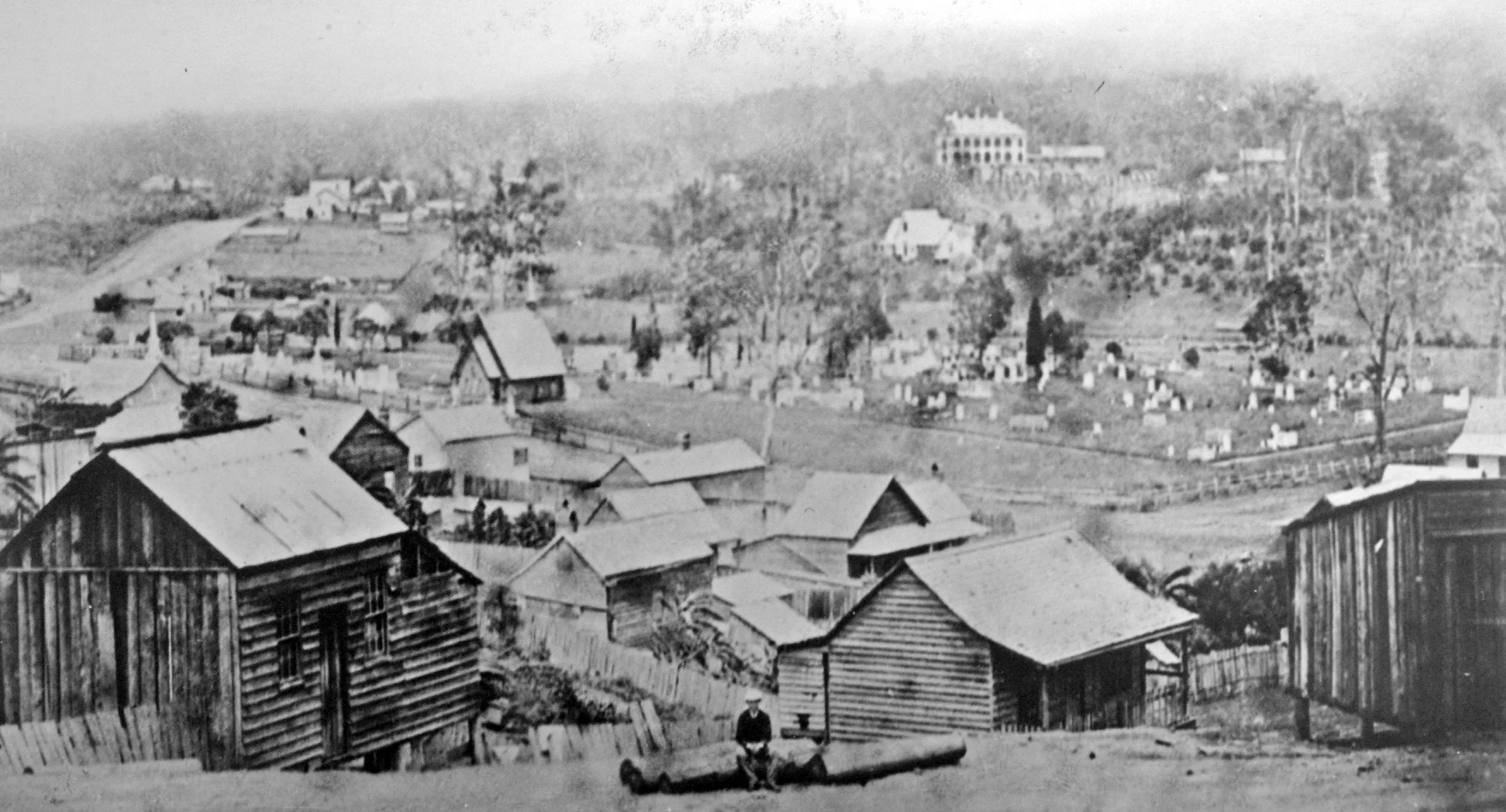
North Brisbane Burial Grounds
Opened in 1843, this became Brisbane’s principal cemetery for more than twenty years. It was divided into denominational sections and used for thousands of burials.
By the late nineteenth century, public health concerns and urban expansion led to its closure. Many remains and monuments were relocated to Toowong Cemetery, though historical records indicate that not all graves were removed. The area is now covered by parkland and development around Milton and Roma Street.
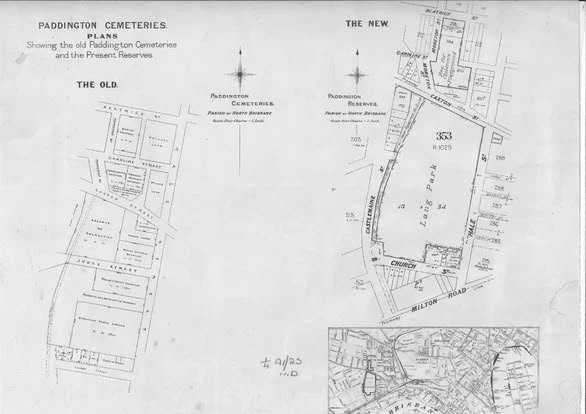
Paddington Cemetery
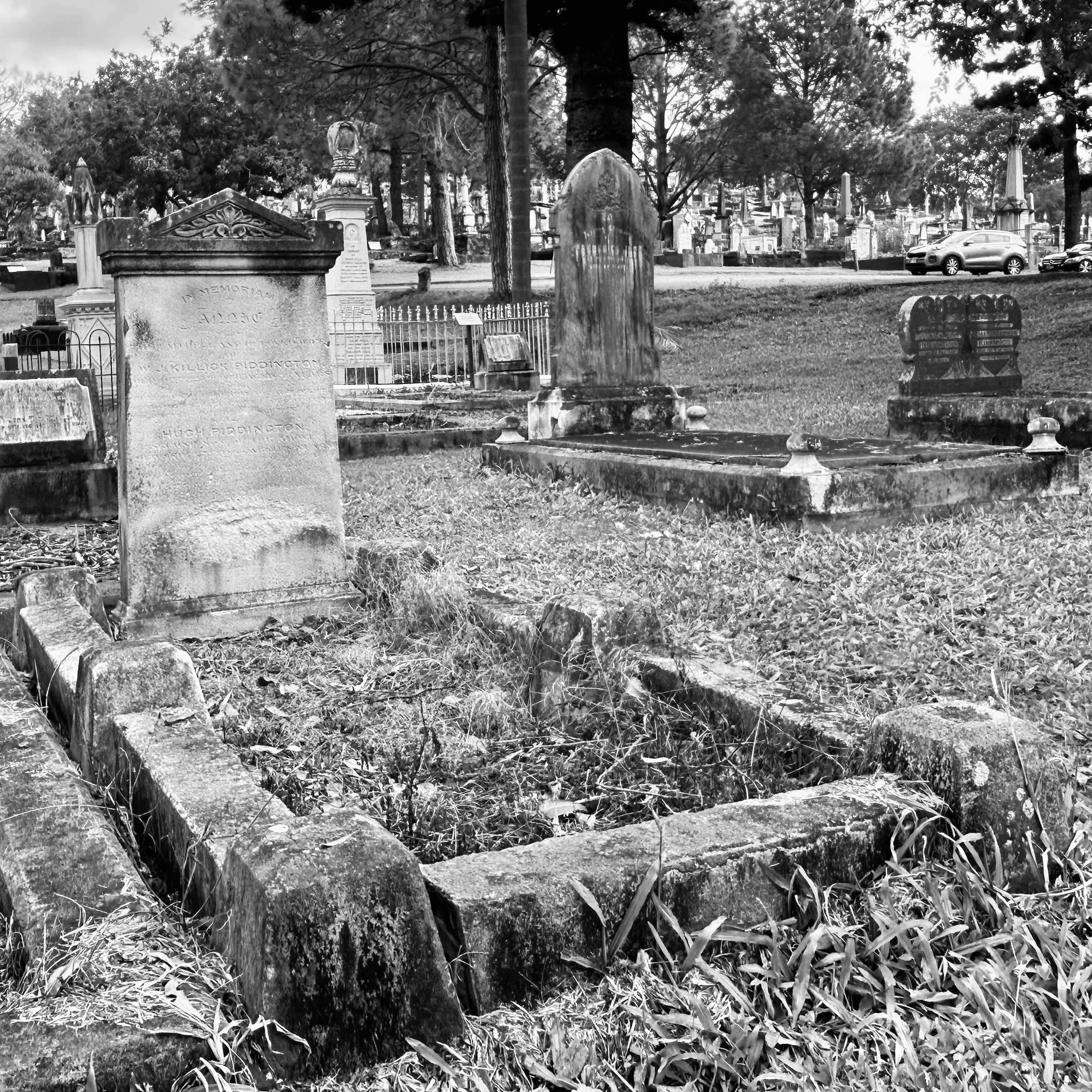
Paddington Cemetery formed part of the wider North Brisbane Burial Grounds complex and was in use from approximately 1844 to 1875.
Its closure and redevelopment reflect the broader pattern of early cemeteries being displaced as Brisbane expanded westward. The site today includes sporting and recreational facilities, with little visible trace of its former use.
These three burial grounds reveal how Brisbane’s earliest cemeteries were gradually absorbed into the city fabric, leaving largely invisible layers of history beneath modern streets and buildings.
Living heritage cemeteries
Tingalpa Cemetery
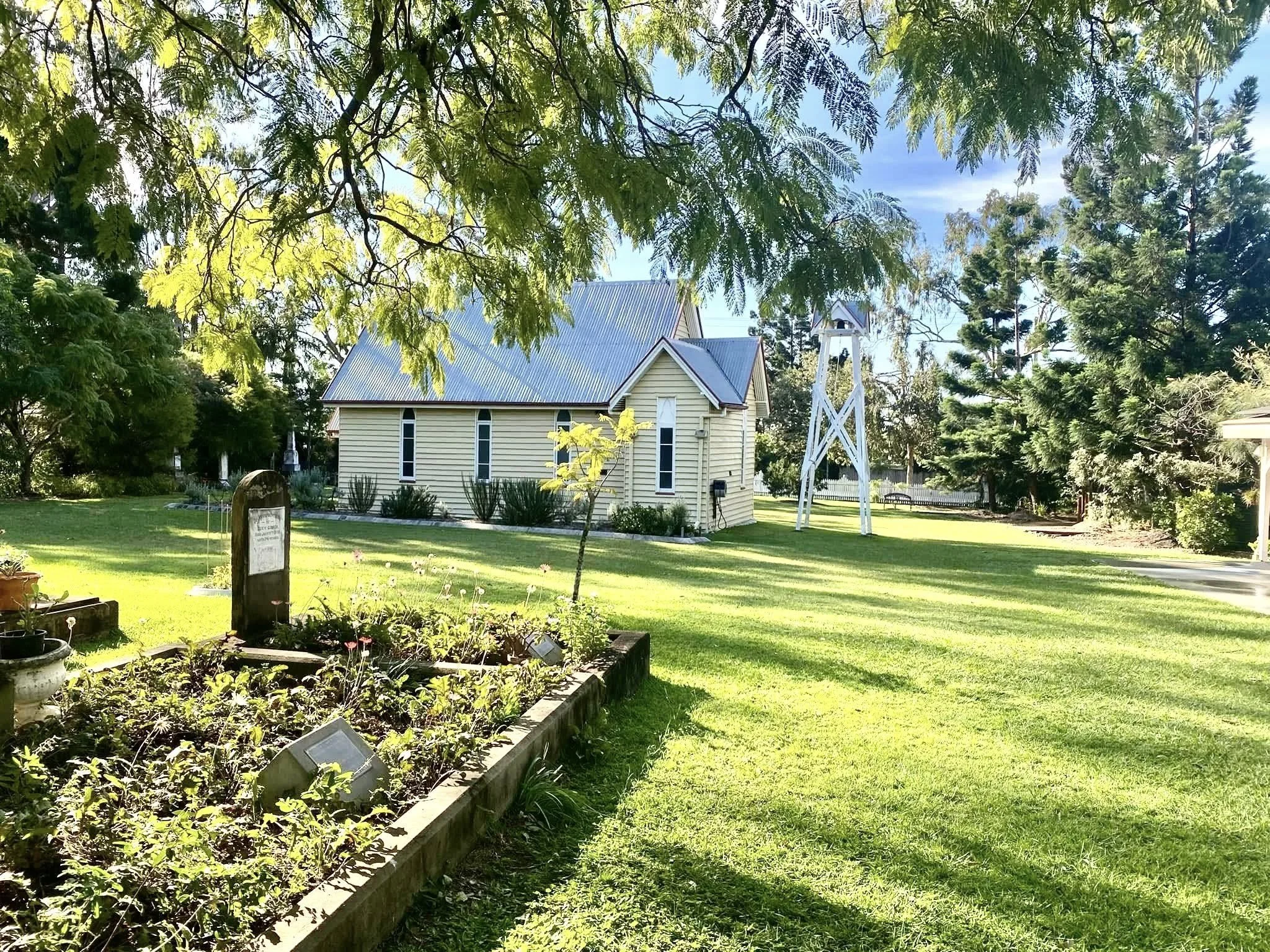
Tingalpa Cemetery was consecrated in 1868 and includes the historic Pioneers’ Chapel. It is one of Brisbane’s oldest surviving suburban cemeteries and reflects the role of small community burial grounds in nineteenth-century settlement patterns.
The cemetery remains an important heritage site, cared for by local community and preservation groups.
Balmoral Cemetery
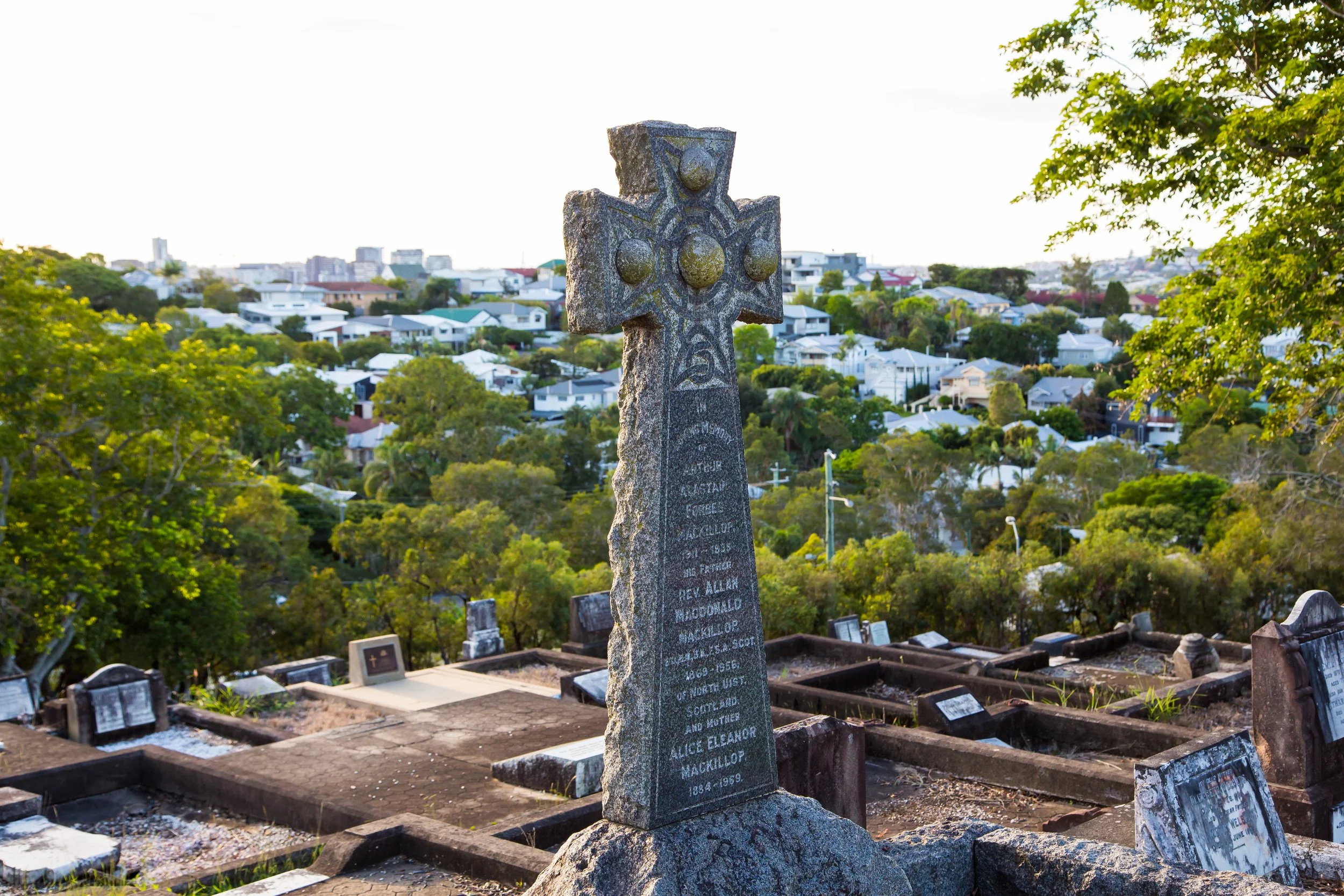
Land for Balmoral Cemetery was gazetted in 1869, with the first burial recorded in 1874. It is one of Brisbane’s larger cemeteries and was also known historically as Bulimba or Morningside Cemetery.
Its scale and layout reflect the growing population of Brisbane’s eastern suburbs in the late nineteenth century.
Lutwyche Cemetery
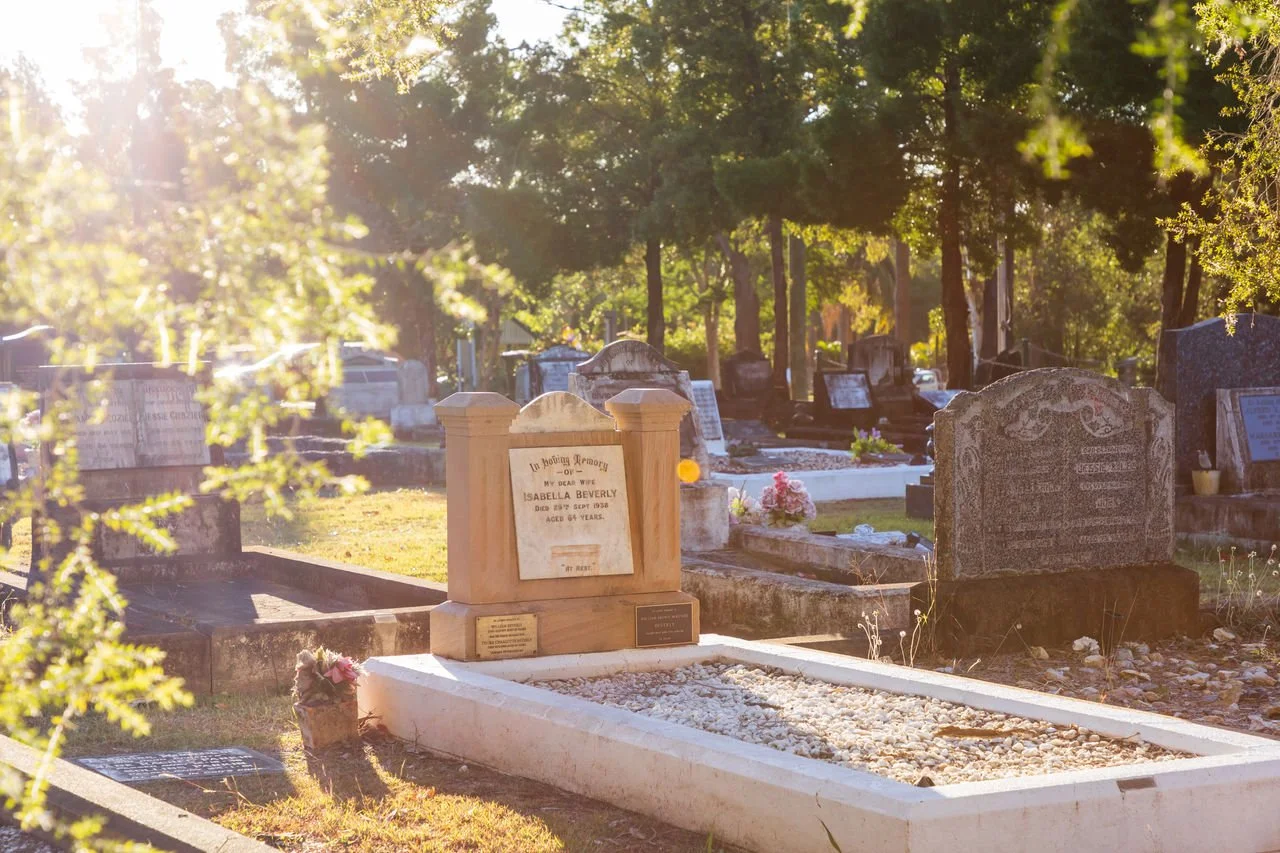
Lutwyche Cemetery was established in 1878 and includes significant heritage features such as the Sexton’s Residence and early shelter structures.
It contains war graves and memorials and demonstrates Victorian-era cemetery planning with its formal grid layout and monumental headstones.
Toowong Cemetery
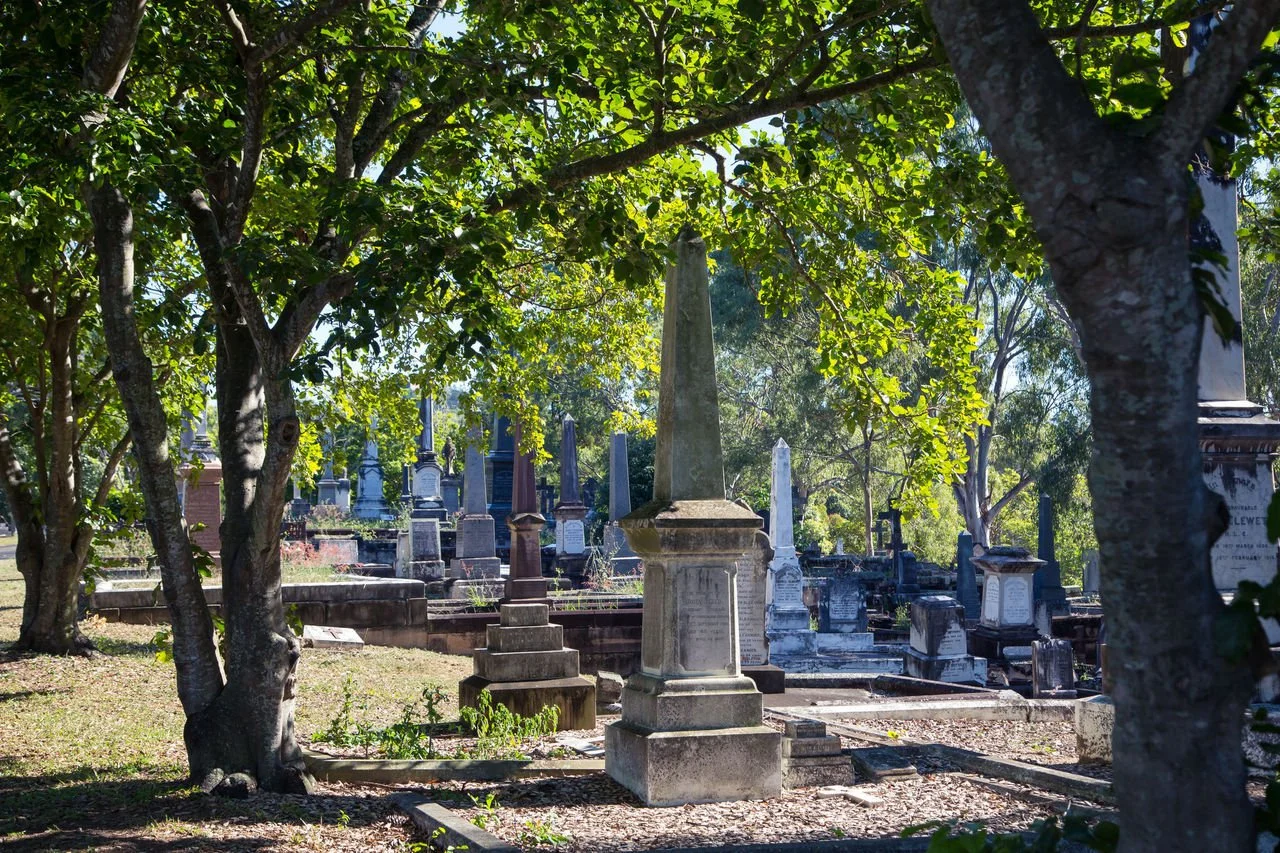
Burials began at Toowong Cemetery in 1871, with the cemetery officially opened in 1875. It replaced the North Brisbane Burial Grounds as Brisbane’s main public cemetery.
It is the resting place of many prominent Queenslanders and remains one of the most historically significant cemeteries in the state.
South Brisbane Cemetery
Established around 1870, South Brisbane (Dutton Park) Cemetery remains an active heritage cemetery with limited burial availability.
It contains graves of early South Brisbane residents and reflects the expansion of burial services south of the river as Brisbane’s population grew.
(below LtoR: Tingalpa; Balmoral; Toowong; Lutwyche)
A changing relationship with remembrance
Brisbane’s cemeteries illustrate how communities have adapted burial practices to changing urban needs. Early burial grounds were once located on the fringes of settlement, but many now lie beneath the city itself. Later cemeteries such as Toowong, Lutwyche and Balmoral remain visible reminders of nineteenth-century planning and social history.
For Brisbane Living Heritage, these cemeteries are not only places of mourning but important cultural landscapes that preserve stories of migration, faith, public health and civic growth.
Understanding both the forgotten burial grounds and the living cemeteries allows us to recognise how remembrance has shaped Brisbane — and how heritage continues to exist quietly within the everyday city.
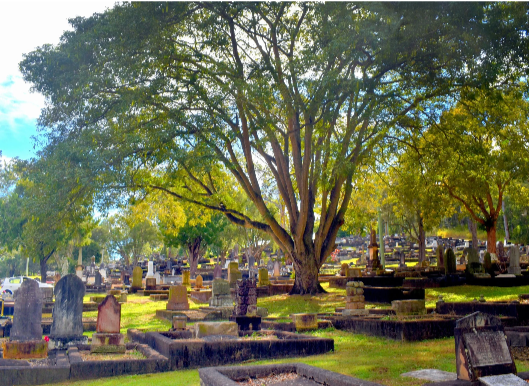
Balmoral Cemetery R.Featherstone
(Editor Note) While we’ve highlighted a number of significant cemeteries across the Brisbane region, we acknowledge that this is not a comprehensive list. Including every cemetery in the area isn’t always possible within the scope of a blog story. However, our intention was to honour the history, heritage, and community stories these places represent, and we hope that purpose and respect are clearly reflected throughout the article.