
Story Three: Chinese Market Gardens: Feeding Early Brisbane
By the late 1800s, Chinese market gardens stretched along the creeks and waterways of Brisbane, supplying much of the city’s fresh fruit and vegetables.
Large garden plots operated beside Breakfast Creek, Enoggera Creek, Ithaca Creek and through areas now known as Kelvin Grove, Ashgrove, Albion and Fairfield. What are busy inner-city suburbs today were once rows of carefully cultivated vegetables worked by Chinese families and labourers from dawn until dark.
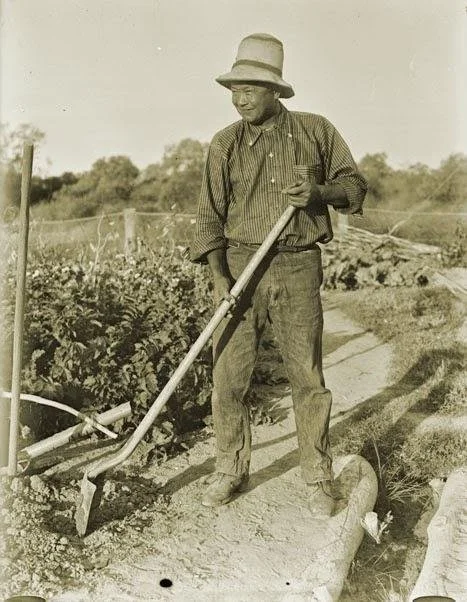
At Breakfast Creek and Eagle Farm, Chinese gardeners transformed floodplain land into highly productive farms. The nearby Temple of the Holy Triad at Albion — built in 1886 and still standing today — became an important cultural and spiritual centre for Brisbane’s Cantonese community, many of whom worked in the surrounding gardens.
In Kelvin Grove and Ashgrove, market gardens lined Enoggera Creek and Waterworks Road well into the twentieth century. Horse and cart deliveries of vegetables were once a familiar sight across Brisbane suburbs.
SLQ
The gardens depended on creek water for irrigation, with wooden lifting devices and hand-built channels drawing water onto the crops. During drought periods, Chinese gardeners were often credited with keeping Brisbane supplied with fresh vegetables when little else could grow.
Despite racism and restrictive legislation, these communities became essential to Brisbane’s food supply and local economy. Their contribution shaped not only what Brisbane ate, but how the city developed around its waterways and fertile flats.
SLQ
Today, little physical evidence of many gardens remains beneath suburban streets and housing developments. Yet their legacy survives through community histories, family stories, and Brisbane’s enduring multicultural food culture.